
Secure Your APIs with API-to-API Adaptive MFA
Secure Your APIs with API-to-API Adaptive MFA
Apply risk-based multi factor authentication across REST, GraphQL, and internal microservices to prevent unauthorized access and maintain full control over API operations.
Why API-to-API Authentication Matters
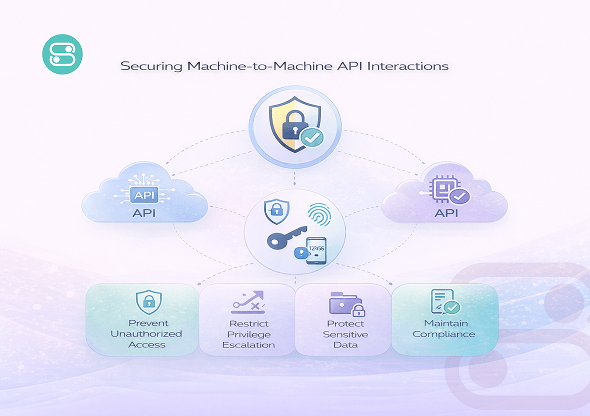
Securing machine-to-machine (M2M) communication is critical because APIs are the backbone of modern applications, connecting microservices and cloud systems.
Without strong authentication controls, service accounts can be compromised. Attackers might gain unauthorized access, escalate privileges, or manipulate sensitive data. Weak API keys or missing verification between services increase the risk of service abuse and data breaches.
Implementing robust multi factor authentication for API-to-API interactions ensures that every service request is verified based on risk, device, or behavior. This approach blocks unauthorized calls and also enforces accountability and strengthens overall API security posture.
- Prevent unauthorized access to critical service accounts and API endpoints.
- Reduce the risk of privilege escalation and lateral movement across services.
- Protect sensitive data and internal processes from manipulation or exposure.
- Maintain compliance and security governance for enterprise API ecosystems.
- Ensure that every API call is verified dynamically for improved security.
What is Adaptive MFA?
Adaptive multi-factor authentication (MFA) is an advanced approach to API security that adjusts verification requirements based on the assessed risk of each request.
Traditional MFA applies the same checks every time but adaptive MFA evaluates factors like IP reputation, device fingerprinting and behavioral patterns to determine whether additional authentication steps are necessary. This dynamic risk-based approach strengthens protection against unauthorized access while maintaining a smooth experience for trusted services.
Adaptive MFA can be applied across modern architectures, including REST APIs, GraphQL endpoints, and internal microservices, ensuring consistent security for machine-to-machine interactions.
By incorporating mfa authentication into API workflows, organizations can prevent service abuse, reduce operational risks, and enforce granular, context-aware access controls without disrupting legitimate automated processes.

Common API-to-API Authentication Challenges
Weak or Static API Keys
APIs using simple or unrotated keys are vulnerable to unauthorized access and automated attacks. Implementing multi factor authentication API mechanisms helps mitigate the risk of key compromise.
No Verification Between Service-to-Service Calls
Without proper verification, one service can impersonate another, leading to data breaches or misuse. Enforcing 2 factor authentication between services ensures that only authorized API calls are executed.
Credential Compromise
Stolen or exposed credentials allow attackers to manipulate APIs and extract sensitive data. Combining strong authentication with risk based monitoring reduces the impact of compromised accounts.
Lack of Adaptive Security
Static security measures fail to account for unusual behavior or high risk requests. Adaptive MFA dynamically adjusts authentication requirements, protecting critical endpoints from misuse or unauthorized access.
How API-to-API Adaptive MFA Works

Identify API Endpoints Requiring M2M ProtectionSchema
Start by mapping all machine-to-machine (M2M) API endpoints which handle sensitive data or critical operations. This ensures multi factor authentication API is applied only where high risk access could occur.

Implement Adaptive MFA Policies for Risk-Based Authentication
Define policies that adjust authentication requirements based on factors like IP reputation, device fingerprint, and behavioral analysis. This adaptive MFA approach prevents unauthorized access while minimizing friction for trusted services.

Authenticate Every API Request Dynamically
Each request is verified in real time according to risk level, ensuring no unverified requests succeed. Dynamic authentication enforces consistent security across REST APIs, GraphQL endpoints, and internal microservices.

Monitor and Log Suspicious Activity
Consistently track API calls to detect anomalies or potential abuse. Logging and alerts provide actionable insights for auditing and rapid incident response.
Advanced Features of API-to-API multi factor authentication
Multi-Factor Authentication (OTP, Certificates, Hardware Tokens)
Supports a variety of verification methods to secure machine-to-machine calls. Implementing multi factor authentication ensures that every API request is validated before processing.
2-Factor Authentication Support
Adds an additional verification step for sensitive services requiring stricter security. Using 2 factor authentication reduces the risk of unauthorized API access and service abuse.
Adaptive MFA Policies
Applies risk-based step-up authentication depending on IP, device, or behavioral signals. Dynamic adjustments strengthen protection while minimizing friction for trusted API traffic.
Integration with Cloud and Office 365
Works smoothly with Office 365, SaaS applications, and custom APIs for M2M calls. Ensures consistent mfa authentication app enforcement across all connected services.
MFA Authentication App
Optional app-based authentication automates secure API calls for microservices and internal endpoints. Supports OTPs, push notifications, and token verification for reliable, automated API security
Benefits of Using API-to-API Adaptive MFA
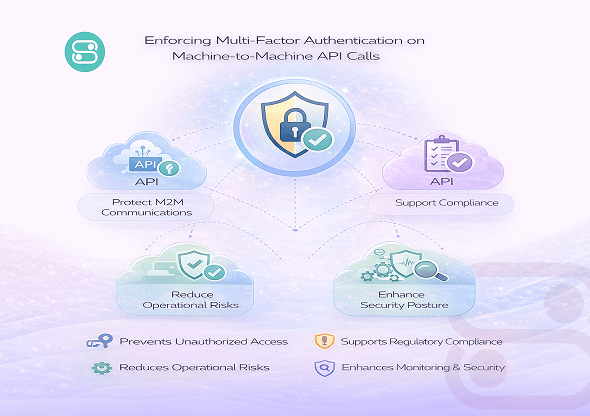
- Protects machine-to-machine communications by enforcing multi factor authentication on every API call, ensuring only verified services interact.
- Prevents unauthorized access and service abuse through dynamic risk-based checks and 2 factor authentication enforcement across sensitive endpoints.
- Supports regulatory compliance with SOC2, ISO, and GDPR by logging and auditing every API request securely.
- Reduces operational risks by automating authentication and access controls, minimizing manual errors and misconfigurations.
- Enhances overall API security posture by combining adaptive MFA policies with real-time monitoring for threats and anomalies.
Supported Integrations & Platforms
Office 365 and Microsoft 365 Services
Smoothly integrates with multi factor authentication Office 365 to secure service-to-service API calls. Ensures consistent access controls and risk based verification across enterprise cloud environments.
Cloud APIs and SaaS Applications
Supports popular SaaS platforms and cloud APIs, enforcing adaptive MFA for all machine-to-machine interactions. Protects critical integrations from unauthorized access and credential compromise.
Internal Microservices and REST/GraphQL Endpoints
Applies adaptive MFA policies to internal microservices, REST APIs, and GraphQL endpoints. Strengthens security for inter-service communication without disrupting automated workflows.
Works with MFA Apps and Authentication Tools
Compatible with app-based MFA solutions for automated verification of API requests. Allows enterprises to leverage existing mfa authentication app tools for seamless integration.
Machine-to-Machine Security: Industry Applications
Finance
Protect financial transaction APIs from unauthorized access and potential fraud. Adaptive multi factor authentication validates every machine-to-machine call based on risk signals and device reputation. This ensures secure transactions, reduces exposure to privilege escalation, and improves overall API reliability.
E-Commerce
Prevent account takeovers, fraudulent transactions, and automated API abuse. Dynamic MFA policies enforce identity verification for all service-to-service calls across SaaS and cloud APIs. This reduces fraudulent activity, protects customer data, and strengthens trust in the platform.
Tech / SaaS
Secure internal microservices and machine-to-machine API communication in multi-tenant environments. Adaptive multi factor authentication automatically adjusts verification requirements based on request risk and behavior. The result is a resilient API ecosystem and consistent protection for all services.
Case Studies / Success Stories
Financial Services API Protection
Problem:
A large bank faced repeated unauthorized API access attempts, risking transaction integrity and customer data.
Solution:
Adaptive multi factor authentication was implemented across all M2M financial endpoints with risk-based verification.
Result:
Unauthorized access attempts dropped by 93% and transaction success rates improved to 99.9%.
Healthcare Data Security
Problem:
A healthcare provider’s internal APIs exposed sensitive patient records due to weak service-to-service authentication.
Solution:
Adaptive MFA policies were applied to REST and GraphQL endpoints, with continuous monitoring of all API calls.
Result:
Data breach incidents reduced to 0 and sensitive patient data remained fully protected.
E‑commerce Abuse Mitigation
Problem:
An online retailer experienced account takeovers and fraudulent transactions through unsecured API endpoints.
Solution:
Dynamic MFA enforcement and verification were applied to critical APIs and SaaS integrations.
Result:
Account takeover incidents fell by 86% and fraudulent transactions dropped by 35%.
Frequently Asked Questions
API‑to‑API adaptive MFA is a risk aware authentication method. It protects machine‑to‑machine calls by requiring additional verification based on context and behavior. It strengthens security beyond static credentials between services.
Adaptive MFA adjusts authentication requirements dynamically based on risk factors like IP reputation, device signals, and behavior. Regular MFA applies the same verification steps every time.
Yes. It integrates with multi factor authentication Office 365 and other cloud environments to enforce strong authentication across both user and API calls.
The solution works with popular mfa authentication app tools, allowing API proxies or services to trigger verification steps using app‑based OTPs or push confirmations.
Absolutely. The adaptive MFA framework can be applied to multi factor authentication API calls across REST, GraphQL, and internal microservices for consistent protection.
Secure Every API Request with Adaptive MFA
Protect machine-to-machine communication by enforcing multi factor authentication dynamically. Prevent unauthorized access, reduce service abuse, and maintain complete control over API interactions.




